
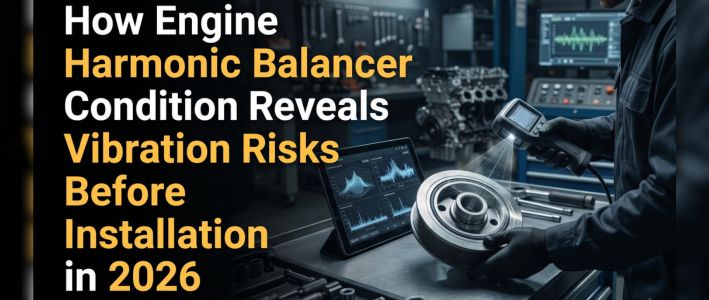
How Engine Harmonic Balancer Condition Reveals Vibration Risks Before Installation in 2026
When purchasing Used Engines, buyers should evaluate more than mileage, compression, and service history. The condition of external engine components can also reveal potential installation challenges and performance concerns. One important component is the engine harmonic balancer, which helps reduce crankshaft torsional vibrations during operation. Inspecting this part before installation can help buyers identify possible vibration risks, assess component compatibility, and make more informed decisions when selecting quality used engines in 2026.
What Is an Engine Harmonic Balancer?
An engine harmonic balancer, also called a crankshaft damper, is mounted on the front of the crankshaft. It typically consists of a metal hub and an inertia ring connected by a rubber or other damping material, depending on the design.
As the engine operates, combustion forces create twisting vibrations in the crankshaft. The harmonic balancer helps absorb and control these oscillations, reducing stress on the crankshaft and related components. Many designs also serve as the mounting point for the accessory drive pulley.
If the balancer becomes worn, damaged, or incorrectly installed, it may contribute to engine vibration, belt misalignment, and premature wear of connected components. Therefore, checking its condition is a valuable step when evaluating a replacement engine.
Common Signs of Harmonic Balancer Wear
A visual inspection can reveal several warning signs before a replacement engine is installed.
- Cracked or Deteriorated Rubber: On balancers that use a rubber isolation layer, cracks, hardening, separation, or visible deterioration can indicate aging or damage. A deteriorated layer may reduce the component’s ability to dampen vibration effectively.
- Separation Between the Hub and Outer Ring: The inner hub and outer inertia ring should remain properly aligned. If the outer ring appears shifted, loose, or partially separated, the balancer may no longer operate as designed. Such damage warrants further inspection or replacement.
- Wobbling or Irregular Rotation: A visibly wobbling balancer during operation can indicate damage, incorrect seating, or alignment problems. If the engine can be safely operated under appropriate workshop procedures, a technician may inspect its rotation. Never approach moving belts or pulleys while an engine is running.
- Damaged Pulley Grooves: Worn, contaminated, or damaged grooves can affect accessory belt tracking. Buyers should also check for rust, impact marks, and other visible defects that could complicate installation.
How Harmonic Balancer Condition Helps Identify Vibration Risks
Engine vibration can originate from several sources, including worn engine mounts, ignition problems, rotating assemblies, accessory components, or crankshaft-related issues. A damaged harmonic balancer is one possible cause.
A balancer with deteriorated damping material may fail to control torsional oscillations properly. Depending on the engine design and severity of the damage, this can contribute to unusual vibration, belt noise, or additional mechanical stress.
However, a damaged balancer does not automatically mean the entire engine is defective. Buyers should consider the component’s condition alongside other inspection findings, such as compression results, oil pressure information, leak checks, and diagnostic records.
For anyone comparing Used Engines, a documented inspection helps distinguish a potentially serviceable engine that needs an external component replaced from one with more serious internal concerns.
Why Compatibility Matters Before Installation
Harmonic balancers are not universally interchangeable. Their dimensions, mounting arrangements, crankshaft interfaces, timing marks, and accessory pulley configurations can vary between engine families and model years.
Before installation, buyers and technicians should verify the replacement engine’s exact specifications using the vehicle identification number (VIN), engine code, and manufacturer parts information where available.
Important checks include:
- Crankshaft mounting and bolt specifications.
- Pulley diameter and accessory belt alignment.
- Timing mark location and visibility.
- Compatibility with the vehicle’s accessory drive system.
- Manufacturer requirements for fasteners, torque, and installation procedures.
Installing an incorrect balancer can create alignment problems or interfere with accurate timing references. For quality used engines, checking these details before the engine enters the vehicle can help prevent avoidable delays and additional labor costs.
Should Buyers Replace a Damaged Harmonic Balancer?
Replacement is often appropriate when the balancer shows significant cracking, separation, wobble, or other damage. The final decision should follow the engine manufacturer’s service guidance and a qualified technician’s inspection.
Buyers should also determine whether the engine supplier includes the balancer, supplies it as a separate component, or recommends transferring a compatible part from the original engine. A transferred component should be inspected rather than assumed to be reusable.
If the original balancer is being reused, the technician should verify its condition and compatibility with the replacement engine. Installation should follow the correct procedures, including specified fastener torque and any required replacement hardware.
How to Evaluate Used Engines More Effectively in 2026
A harmonic balancer inspection is most useful when combined with a broader engine evaluation. Before purchasing, request available engine identification details, mileage information, inspection results, and written warranty terms.
Ask the supplier whether the engine has been tested and whether external accessories are included. Clarify what the warranty covers, which installation requirements apply, and whether damage caused by incompatible components is excluded.
Buyers should compare the total replacement cost rather than focusing only on the initial purchase price. A reasonably priced engine that requires unexpected component replacement or additional labor may not represent the best overall value.
Choosing quality used engines involves checking compatibility, reviewing available documentation, and working with a supplier that clearly explains the engine’s condition and warranty coverage.
Final Thoughts
The engine harmonic balancer plays an important role in managing crankshaft vibration and maintaining accessory drive alignment. Cracked damping material, ring separation, wobble, and pulley damage can signal problems that deserve attention before installation.
For buyers evaluating Used Engines in 2026, inspecting this component and confirming its compatibility can help reduce installation surprises. Combined with engine testing, reliable documentation, and clear warranty terms, a careful inspection supports a more informed replacement engine purchase.