
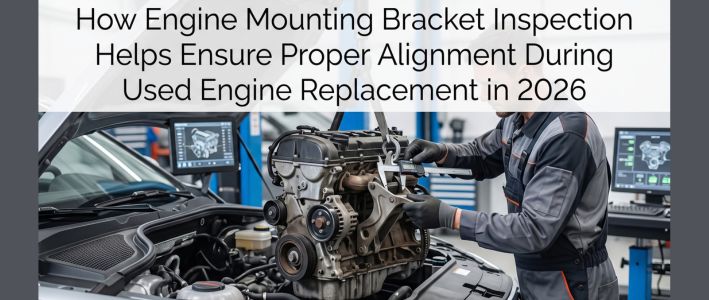
How Engine Mounting Bracket Inspection Helps Ensure Proper Alignment During Used Engine Replacement in 2026
Engine mounting brackets play an important role in positioning and securing an engine inside a vehicle. During a replacement, even a small alignment problem can create vibration, clearance issues, drivetrain stress, or installation difficulties. Buyers researching used engines for sale should therefore consider mounting compatibility alongside engine specifications and condition. Choosing quality used engines with the correct mounting configuration can make installation more straightforward while helping maintain proper powertrain alignment and vehicle performance.
What Are Engine Mounting Brackets?
Engine mounting brackets are structural components that connect the engine to the vehicle’s engine mounts and chassis or subframe. Their design varies depending on the engine, vehicle platform, transmission configuration, and model year.
Mounting brackets may differ in:
- Bolt-hole locations
- Bracket shape
- Mounting height
- Material thickness
- Mounting angles
- Engine-to-chassis positioning
Because of these differences, a replacement engine must be compatible with the vehicle’s existing mounting arrangement.
Why Mounting Bracket Inspection Matters
During an engine replacement, technicians must position the engine accurately before tightening the mounting hardware. Damaged, bent, cracked, or incompatible brackets can prevent the engine from sitting in its intended position.
An inspection can identify problems before the engine is fully installed.
Common issues include:
- Cracked brackets
- Bent mounting surfaces
- Damaged bolt holes
- Corrosion
- Missing hardware
- Incorrect bracket configuration
- Signs of previous impact damage
Identifying these issues early can reduce installation delays and unnecessary component replacement.
How Bracket Condition Affects Engine Alignment
Engine alignment determines how the powertrain sits within the vehicle. The engine must maintain the correct relationship with components such as the transmission, driveshafts, exhaust system, cooling system, and surrounding chassis components.
A damaged mounting bracket can shift the engine from its intended position. Potential consequences may include:
- Increased vibration
- Exhaust misalignment
- Clearance problems
- Drivetrain stress
- Uneven mount loading
- Difficulty connecting accessories
For this reason, bracket inspection is an important part of replacement-engine installation.
Checking Mounting Brackets Before Installation
Before installing a replacement engine, technicians can visually inspect the brackets and mounting surfaces. The inspection should look for cracks, distortion, excessive corrosion, damaged threads, and unusual wear patterns. Bolt holes should also be checked for proper positioning and condition.
Where applicable, the bracket can be compared with the original engine’s mounting configuration. This step can help confirm that the replacement engine will sit correctly within the vehicle.
Matching Brackets With the Replacement Engine
Not every engine within the same general family uses identical mounting hardware. Differences can occur between:
- Model years
- Vehicle trims
- Engine variants
- Transmission combinations
- Drive configurations
- Regional specifications
When comparing used engines for sale, buyers should provide accurate vehicle information to the supplier. VIN details, engine codes, model year, and drivetrain information can help with compatibility verification.
Signs of a Potential Mounting Problem
Several symptoms may indicate that an engine is not correctly positioned or that mounting components require attention.
These can include:
- Excessive Vibration: Unusual vibration after installation may indicate problems with engine mounts, brackets, or powertrain positioning.
- Unusual Noise: Clunking, knocking, or contact noises during acceleration can indicate movement or interference around the mounting system.
- Component Clearance Issues: If the engine sits incorrectly, surrounding components may have insufficient clearance.
- Difficult Installation: Problems lining up mounting bolts can indicate a compatibility or positioning issue.
These symptoms should be investigated rather than ignored.
How Proper Alignment Protects Other Components
Correct engine positioning helps maintain the intended relationship between the engine and other drivetrain components.
For example, incorrect positioning can place additional stress on:
- Transmission mounts
- Exhaust connections
- Driveshaft components
- Cooling hoses
- Wiring harnesses
- Fuel lines
- Intake components
Proper mounting therefore contributes to more than engine stability. It can also help prevent secondary installation problems.
Why Engine Quality and Mounting Compatibility Go Together
A mechanically sound engine still needs to be compatible with the vehicle’s mounting system. When evaluating quality used engines, buyers should consider both internal engine condition and external compatibility.
Important evaluation points include:
- Engine identification
- Vehicle compatibility
- Mounting configuration
- Mileage
- Testing information
- Physical condition
- Included components
- Warranty terms
This broader approach can reduce the risk of discovering compatibility problems after delivery.
Inspecting Mounting Hardware
Mounting brackets should not be inspected in isolation. The associated bolts, mounts, bushings, and mounting surfaces should also be examined.
Damaged or excessively worn hardware may affect how securely the engine is positioned. Technicians should follow the vehicle manufacturer’s specifications for installation and tightening procedures. Correct hardware and proper installation torque are important for maintaining secure mounting.
Used Engine Replacement in 2026
Modern vehicles increasingly combine complex powertrain systems with tightly packaged engine compartments. This makes accurate engine positioning particularly important during replacement work.
Before purchasing from listings for used engines for sale, buyers can ask suppliers about compatibility and available engine documentation. Working with suppliers that provide information about quality used engines can also make it easier to verify the engine before installation.
Best Practices for Engine Mounting Inspection
A practical inspection process should include:
- Verify the replacement engine’s identification.
- Confirm vehicle and drivetrain compatibility.
- Compare mounting bracket configurations.
- Inspect brackets for cracks or distortion.
- Check mounting holes and threads.
- Inspect engine mounts and bushings.
- Verify surrounding component clearance.
- Use the manufacturer’s installation specifications.
- Recheck alignment after installation.
- Monitor for unusual vibration or noise.
These steps can help reduce installation-related problems.
Final Thoughts
Engine mounting bracket inspection is an important part of replacing a used engine because proper alignment affects vibration control, component clearance, drivetrain positioning, and overall installation quality. A damaged or incompatible bracket can create problems even when the replacement engine itself is mechanically sound.
When comparing used engines for sale, buyers should look beyond price and mileage and verify mounting compatibility with their specific vehicle. Selecting quality used engines that match the correct engine and mounting configuration can make the replacement process more predictable.
With careful compatibility checks, thorough bracket inspection, correct installation procedures, and regular post-installation monitoring, vehicle owners can help ensure that their replacement engine is positioned correctly and operates reliably.