
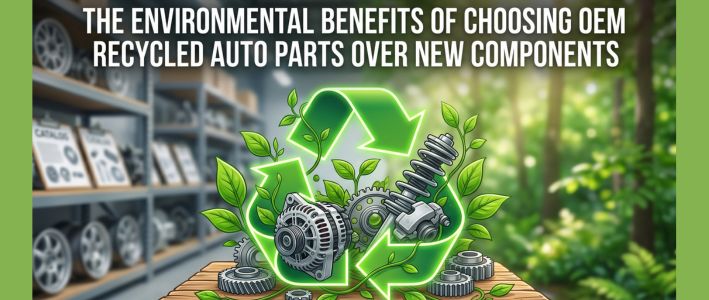
The Environmental Benefits of Choosing OEM Recycled Auto Parts Over New Components
Sustainability has become a major priority for consumers, businesses, and industries worldwide in 2026. As environmental concerns continue to grow, vehicle owners are increasingly looking for ways to reduce their carbon footprint without sacrificing performance or reliability. One of the most effective yet often overlooked solutions is the use of OEM recycled auto parts.
Rather than purchasing newly manufactured components, many drivers and repair shops are choosing recycled Original Equipment Manufacturer (OEM) parts. These components are sourced from vehicles that are no longer in service, carefully inspected, tested, and prepared for reuse. From engines and transmissions to body panels and electronic modules, recycled OEM parts provide a practical and environmentally responsible alternative to new replacements.
The growing demand for quality used engines and used transmissions with warranty reflects a broader shift toward sustainable automotive repair practices. This article explores the environmental benefits of choosing OEM recycled auto parts and why they are becoming an increasingly popular option in 2026.
What Are OEM Recycled Auto Parts?
OEM recycled auto parts are original manufacturer components recovered from vehicles that have been retired, damaged, or salvaged.
Unlike aftermarket parts, OEM recycled parts are:
- Manufactured by the original vehicle maker
- Designed for exact compatibility
- Built to factory specifications
- Tested before resale
Common recycled OEM components include:
- Engines
- Transmissions
- Alternators
- Starters
- Body panels
- Suspension components
- Electronic modules
These parts often provide the same fit and functionality as new components while reducing environmental impact.
Reducing Automotive Waste
Millions of vehicles reach the end of their service life every year.
Without recycling programs, many usable components would end up in landfills.
Choosing recycled OEM parts helps:
- Reduce landfill waste
- Minimize disposal requirements
- Extend component life cycles
- Promote responsible resource use
Every reused automotive part prevents valuable materials from being discarded unnecessarily.
Lowering Manufacturing Emissions
Manufacturing new automotive parts requires significant energy consumption.
Production processes often involve:
- Mining raw materials
- Metal refining
- Casting and machining
- Transportation
- Packaging
These activities generate substantial greenhouse gas emissions.
Reusing existing components dramatically reduces the need for new manufacturing and lowers overall carbon emissions.
Conserving Natural Resources
Automotive manufacturing depends on large quantities of:
- Steel
- Aluminum
- Copper
- Plastics
- Rare earth materials
Extracting these resources places pressure on the environment through:
- Mining operations
- Habitat disruption
- Water consumption
- Energy use
OEM recycling helps conserve valuable resources by maximizing the lifespan of existing materials.
Supporting the Circular Economy
The automotive industry is increasingly embracing circular economy principles.
A circular economy focuses on:
- Reuse
- Recycling
- Resource efficiency
- Waste reduction
OEM recycled auto parts play a key role by keeping valuable components in service longer rather than replacing them prematurely.
This approach benefits both consumers and the environment.
Reducing Energy Consumption
Producing a new engine or transmission requires a tremendous amount of energy.
Processes such as:
- Smelting metals
- Precision machining
- Assembly
- Testing
consume significant electricity and fuel.
Choosing recycled components eliminates many of these energy-intensive manufacturing stages.
The result is a substantially lower environmental footprint.
Why Quality Used Engines Are a Sustainable Choice
Engine replacement is one of the most resource-intensive automotive repairs.
Purchasing quality used engines helps reduce environmental impact by:
- Reusing existing components
- Avoiding new manufacturing emissions
- Conserving raw materials
- Extending vehicle lifespan
Many modern engines are capable of operating reliably for hundreds of thousands of miles when properly maintained.
Reusing serviceable engines makes both economic and environmental sense.
The Environmental Value of Used Transmissions With Warranty
Transmissions are among the most complex automotive components.
Manufacturing a new transmission requires:
- Extensive machining
- Precision engineering
- Significant material consumption
By selecting used transmissions with warranty, vehicle owners can:
- Reduce resource demand
- Minimize manufacturing waste
- Extend the useful life of existing components
Warranty coverage also provides confidence in the quality and reliability of recycled parts.
Extending Vehicle Lifespan
Replacing major components rather than entire vehicles provides substantial environmental benefits.
Vehicle production generates emissions through:
- Manufacturing
- Shipping
- Assembly
- Supply chain operations
When drivers repair existing vehicles using recycled OEM parts, they help:
- Reduce new vehicle demand
- Lower production emissions
- Maximize resource utilization
Extending vehicle lifespan remains one of the most effective ways to reduce automotive environmental impact.
Reducing Transportation Emissions
Many recycled parts are sourced domestically or regionally.
This often results in:
- Shorter shipping distances
- Reduced fuel consumption
- Lower transportation emissions
Newly manufactured parts may travel through complex global supply chains before reaching customers.
Recycled components frequently require less transportation overall.
Maintaining OEM Performance Standards
Some vehicle owners mistakenly assume recycled parts compromise quality.
In reality, OEM components were originally designed to:
- Meet factory specifications
- Deliver long-term durability
- Ensure proper compatibility
When sourced from reputable suppliers, recycled OEM parts often provide excellent performance and reliability.
Supporting Automotive Recycling Industries
The growth of recycled auto parts supports an expanding automotive recycling sector.
These businesses help:
- Recover valuable materials
- Process reusable components
- Reduce waste streams
- Promote sustainable practices
Their efforts contribute significantly to environmental conservation.
Economic Benefits Align With Sustainability
Environmental responsibility and cost savings often go hand in hand.
Recycled OEM parts typically offer:
- Lower purchase costs
- Reduced repair expenses
- OEM fit and compatibility
- Faster availability
This combination makes sustainable repair choices more accessible for consumers.
Future Trends in Automotive Sustainability
The automotive industry continues moving toward more sustainable practices, including:
- Advanced recycling technologies
- Improved parts testing procedures
- Circular supply chains
- Enhanced warranty programs
- AI-driven inventory management
These innovations are expected to increase the availability and reliability of recycled components in the coming years.
Choosing a Reliable Supplier
To maximize both environmental and performance benefits, vehicle owners should choose suppliers that offer:
- Comprehensive inspections
- Mileage verification
- Warranty coverage
- Quality assurance testing
- Transparent sourcing practices
Working with reputable suppliers helps ensure successful repairs and long-term reliability.
Why Consumers Are Making the Switch in 2026
Today’s consumers are more environmentally conscious than ever before.
Many drivers now actively seek repair solutions that:
- Reduce waste
- Lower emissions
- Conserve resources
- Support sustainability goals
OEM recycled auto parts provide a practical way to achieve these objectives without compromising vehicle performance.
Final Thoughts
The environmental benefits of choosing OEM recycled auto parts extend far beyond simple cost savings. By reducing waste, conserving natural resources, lowering manufacturing emissions, and supporting the circular economy, recycled components play a crucial role in creating a more sustainable automotive industry.
Whether purchasing quality used engines or investing in used transmissions with warranty, vehicle owners can make environmentally responsible repair decisions while maintaining reliability and performance. As sustainability continues to shape the automotive market in 2026, OEM recycled auto parts are proving to be one of the smartest choices for both consumers and the planet.