
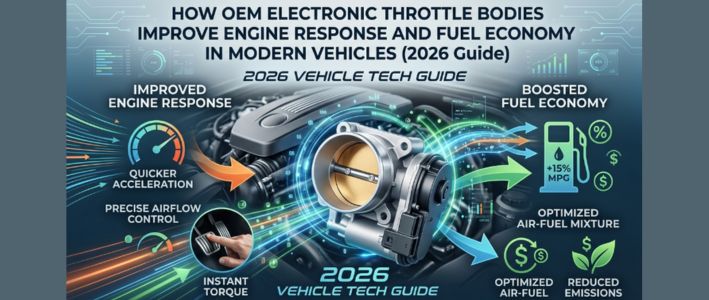
How OEM Electronic Throttle Bodies Improve Engine Response and Fuel Economy in Modern Vehicles (2026 Guide)
Modern vehicles use OEM electronic throttle bodies to precisely regulate airflow into the engine without relying on traditional mechanical throttle cables. Working alongside the Engine Control Unit (ECU), these systems deliver smoother acceleration, better fuel economy, lower emissions, and improved engine performance. When major engine repairs become necessary, selecting quality used engines or browsing professionally inspected used engines for sale can provide reliable and cost-effective replacement solutions.
Table of Contents
- What is an electronic throttle body?
- How electronic throttle control works
- Benefits of OEM throttle bodies
- Improving engine response
- Supporting better fuel economy
- Common throttle body problems
- Choosing reliable replacement engines
- FAQs
What Is an OEM Electronic Throttle Body?
The electronic throttle body controls the amount of air entering the engine.
Unlike older cable-operated systems, modern throttle bodies are electronically controlled through sensors and electric motors.
When the driver presses the accelerator pedal, the pedal position sensor sends information to the Engine Control Unit (ECU). The ECU then commands the throttle body to open or close with exceptional precision.
This electronic communication allows the engine to respond more accurately under changing driving conditions.
How Electronic Throttle Control Works
The throttle body is part of a sophisticated drive-by-wire system. Several components work together, including:
- Accelerator pedal position sensor
- Engine Control Unit (ECU)
- Electronic throttle actuator
- Throttle position sensor
- Mass airflow sensor
- Oxygen sensors
The ECU continuously analyzes information from these sensors before determining the ideal throttle opening.
This process occurs within milliseconds, ensuring smooth engine operation.
Faster and Smoother Engine Response
One of the greatest advantages of OEM electronic throttle bodies is improved throttle response.
Instead of relying on mechanical linkage, electronic systems provide:
- Smoother power delivery
- More consistent engine performance
- Improved responsiveness
- Better driving comfort
Instead of relying on mechanical linkage, electronic systems provide:
- Whether driving in city traffic or accelerating onto the highway, electronic throttle control delivers a refined driving experience.
Improving Fuel Economy
Fuel efficiency has become a major focus for vehicle manufacturers.
Electronic throttle bodies contribute by precisely controlling airflow based on engine demand.
This allows the ECU to maintain the ideal air-fuel mixture during:
- Idle operation
- Normal cruising
- Heavy acceleration
- Hill climbing
- Highway driving
Optimized airflow reduces unnecessary fuel consumption while maintaining strong performance.
Supporting Lower Emissions
Modern emissions regulations require highly accurate engine management. OEM electronic throttle bodies help reduce emissions by ensuring cleaner combustion.
Benefits include:
- Better combustion efficiency
- Reduced fuel waste
- Lower carbon emissions
- Improved catalytic converter performance
- Enhanced environmental compliance
Precise airflow management supports cleaner engine operation throughout all driving conditions.
Better Integration with Modern Safety Systems
Electronic throttle control works seamlessly with many advanced vehicle technologies.
These include:
- Traction control
- Electronic stability control
- Adaptive cruise control
- Collision avoidance systems
- Automatic emergency braking
Because the ECU controls throttle position electronically, these systems can reduce engine power instantly when additional vehicle stability is needed.
Common Electronic Throttle Body Problems
Although highly reliable, throttle bodies may eventually experience wear or contamination.
Common symptoms include:
- Rough idle
- Poor acceleration
- Hesitation during acceleration
- Check engine light
- Reduced fuel economy
- Inconsistent throttle response
Many issues result from carbon buildup or faulty sensors rather than complete mechanical failure.
Importance of Regular Maintenance
Routine maintenance helps electronic throttle bodies perform efficiently.
Recommended maintenance practices include:
- Cleaning carbon deposits
- Inspecting electrical connectors
- Replacing dirty air filters
- Performing ECU diagnostics
- Addressing warning lights promptly
Preventive maintenance helps maintain smooth engine performance and fuel efficiency.
When Engine Replacement Becomes Necessary
If prolonged engine problems cause extensive internal damage, replacing the complete engine may be more economical than performing major repairs.
Many vehicle owners consider professionally inspected used engines for sale because they provide:
- Lower replacement costs
- OEM compatibility
- Proven reliability
- Faster installation
- Excellent value
Purchasing from a reputable supplier ensures proper fitment and dependable performance.
Why Quality Used Engines Are Worth Considering
Professionally inspected quality used engines undergo comprehensive evaluations before being offered for sale.
Typical inspections include:
- Compression testing
- Leak inspections
- Mileage verification
- Mechanical condition assessment
- Compatibility confirmation
These quality checks help ensure long-term reliability while reducing the overall cost of engine replacement.
Future of Electronic Throttle Technology
Throttle control systems continue evolving alongside modern engine technology.
Future developments may include:
- AI-assisted throttle optimization
- Predictive engine management
- Enhanced drive-by-wire systems
- Cloud-connected diagnostics
- Smarter adaptive learning software
These innovations will continue improving fuel efficiency, performance, and overall driving comfort.
Final Thoughts
OEM electronic throttle bodies have become an essential part of modern engine management systems. By precisely controlling airflow and working closely with the ECU, they deliver quicker engine response, smoother acceleration, improved fuel economy, and lower emissions. Their seamless integration with advanced safety and driver assistance systems also contributes to a safer and more enjoyable driving experience.
When engine damage extends beyond practical repair, professionally inspected used engines for sale offer a cost-effective solution for restoring vehicle performance. Choosing quality used engines from trusted suppliers provides added confidence through verified inspections and dependable reliability. Combined with proper maintenance, OEM electronic throttle technology and high-quality replacement engines help modern vehicles deliver efficient, reliable performance throughout 2026 and beyond.