
How Crankshaft Keyway Wear Affects Timing Alignment and Engine Compatibility
The crankshaft plays a critical role in converting piston movement into rotational power that drives a vehicle. Its position and alignment are important for coordinating engine operation with ignition, fuel delivery, and other timing-related systems. A small component known as the crankshaft keyway helps maintain the correct positioning of certain rotating parts, including timing-related components or accessories, depending on the engine design.
When a keyway becomes worn or damaged, it can create alignment problems, looseness, and complications during engine installation. Anyone evaluating a Used Engine should understand how crankshaft keyway condition affects mechanical compatibility and reliability. Inspecting this area is also useful when comparing quality used engines, especially when the replacement engine must match the original vehicle configuration.
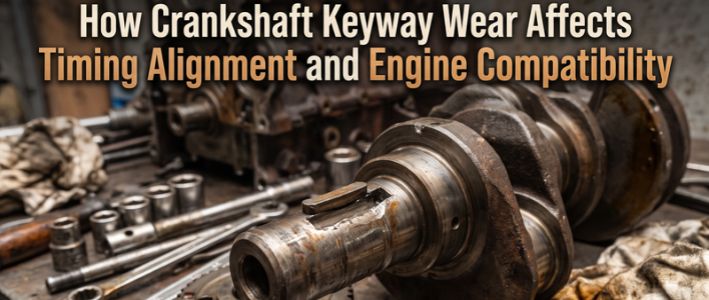
What Is a Crankshaft Keyway?
A crankshaft keyway is a machined slot designed to accommodate a key that helps position and secure a compatible component onto the crankshaft. Depending on the engine design, the key may help locate a timing sprocket, crankshaft pulley, harmonic balancer, or other rotating assembly.
The key and keyway work together to maintain the intended relationship between the crankshaft and the mounted component. The design may use additional fastening methods, such as a crankshaft bolt, interference fit, or other retention arrangement, to secure the assembly.
When the keyway is manufactured correctly and remains undamaged, the component can maintain its intended position during normal operation.
How Keyway Wear Develops
Crankshaft keyway wear may develop gradually or result from incorrect installation, mechanical stress, or previous repairs.
Common causes include:
- Repeated vibration during engine operation
- Incorrectly installed crankshaft pulleys or sprockets
- Loose crankshaft fasteners
- Excessive rotational loading
- Damaged or incorrectly sized keys
- Improper removal techniques during previous servicing
If a mounted component moves repeatedly against the keyway, the slot may become enlarged or its edges may become deformed. This can prevent the key from maintaining a secure positioning relationship.
The severity of damage depends on the engine’s design, operating conditions, material properties, and maintenance history.
How Crankshaft Keyway Wear Affects Timing Alignment
In engines where the crankshaft key or keyway locates the timing sprocket, wear can affect the intended relationship between the crankshaft and the timing assembly. If the sprocket does not remain correctly positioned, the timing relationship between the crankshaft and camshaft may be affected. This can potentially result in incorrect valve timing, depending on the engine design and the extent of movement.
Possible symptoms of timing-related problems include:
- Difficulty starting the engine
- Rough running or unstable idle
- Reduced engine performance
- Engine misfire symptoms
- Abnormal mechanical noises
- Timing-related diagnostic trouble codes on applicable vehicles
These symptoms can also be caused by other engine faults. Proper diagnosis should include the timing system, sensors, fasteners, and related components rather than assuming keyway wear is the only cause.
Why Keyway Condition Matters for Engine Compatibility
Not every crankshaft is interchangeable simply because two engines have similar displacement or physical dimensions. Crankshaft designs can differ in keyway location, width, depth, crankshaft nose dimensions, pulley arrangement, timing sprocket configuration, and bolt specifications.
When selecting a Used Engine, buyers and technicians should verify that the crankshaft configuration matches the intended vehicle application.
Important compatibility checks include:
- Crankshaft nose dimensions: Confirm that the crankshaft front-end dimensions match the required pulley or sprocket assembly.
- Keyway configuration: Verify the keyway position, shape, and dimensions according to the correct engine specification.
- Timing component compatibility: Ensure the timing sprocket and related components are designed for that crankshaft configuration.
- Engine identification: Confirm the engine code, production variation, and vehicle compatibility before installation.
- Sensor arrangement: Check that crankshaft position sensing components are compatible with the vehicle’s control system.
These checks help reduce the risk of fitment problems and unexpected timing-related issues after installation.
Inspecting Crankshaft Keyways Before Engine Installation
A careful inspection can help identify problems before a replacement engine is installed. Technicians should look for visible deformation, rounded slot edges, cracks, metal damage, or evidence that the pulley or sprocket has moved against the crankshaft.
Precision measuring tools may be required to evaluate the keyway dimensions. Measurements should be compared with manufacturer specifications rather than relying on visual appearance alone. If the keyway is damaged, the crankshaft may require an approved repair procedure or replacement. Improvised repairs can compromise component retention and timing accuracy.
When evaluating quality used engines, buyers should also request available inspection records, engine identification details, and warranty information from the supplier.
Preventing Keyway Damage During Engine Installation
Correct installation practices can help reduce the possibility of crankshaft keyway damage.
- Clean the crankshaft mounting area before installing components.
- Use the correct key, sprocket, pulley, and fasteners.
- Inspect mating surfaces for contamination and damage.
- Follow manufacturer torque specifications and installation procedures.
- Avoid forcing components onto the crankshaft.
- Use appropriate tools during pulley or sprocket removal and installation.
A correctly installed assembly helps reduce unwanted movement and supports reliable engine operation.
Final Thoughts
Crankshaft keyway wear can affect component positioning, timing alignment, and engine compatibility when the damaged area is responsible for locating timing-related parts. Identifying wear before installation can help prevent mechanical complications and unnecessary repair expenses.
Whether purchasing a Used Engine or comparing quality used engines, inspecting crankshaft condition and verifying engine configuration are important steps toward a dependable replacement. Careful fitment checks, proper installation, and reliable supplier documentation can help support long-term engine performance.