
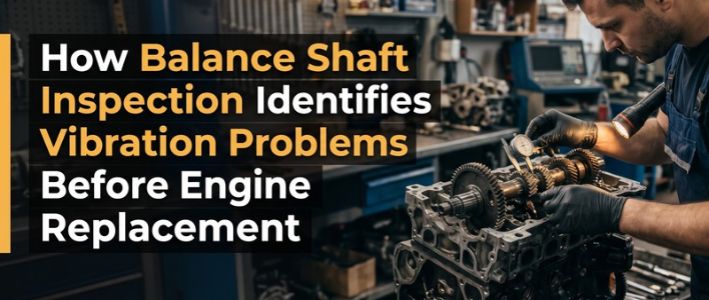
How Balance Shaft Inspection Identifies Vibration Problems Before Engine Replacement
Unusual engine vibration can make a vehicle uncomfortable to drive and may indicate an underlying mechanical problem. While worn engine mounts, damaged rotating components, and ignition faults can all contribute to vibration, balance shaft problems are another possibility in engines equipped with this system. Inspecting the balance shaft assembly before replacing an engine helps identify potential causes, avoid unnecessary expenses, and make better decisions when purchasing Used Engines or comparing used engines with warranty.
What Is an Engine Balance Shaft?
A balance shaft is a rotating component designed to reduce vibrations produced by certain engine configurations. It contains carefully positioned counterweights that rotate to help counteract specific forces generated by moving engine components.
Balance shafts are commonly used in some four-cylinder engines, although their design and application vary by manufacturer and engine model. Depending on the configuration, an engine may use one or more balance shafts driven by gears, chains, or other mechanisms.
When the assembly operates correctly, it helps improve engine smoothness. However, worn bearings, damaged gears, incorrect timing, or shaft imbalance can create unwanted vibration.
Common Symptoms of Balance Shaft Problems
Balance shaft-related issues can produce symptoms similar to other engine faults. Identifying these warning signs is an important first step before deciding whether an engine needs repair or replacement.
1. Excessive Engine Vibration
One of the most noticeable symptoms is abnormal vibration while the engine is running. Drivers may feel shaking through the steering wheel, floor, seats, or dashboard.
Vibration that increases with engine speed may justify inspecting rotating components, including the balance shaft assembly. However, similar symptoms can result from misfires, damaged mounts, or crankshaft-related problems.
2. Unusual Mechanical Noise
Worn balance shaft bearings or damaged drive gears may produce whining, rattling, or grinding sounds. The location and operating conditions of the noise can help a technician narrow down the possible cause.
3. Vibration at Specific RPM Ranges
Some balance shaft faults become more noticeable within particular engine-speed ranges. A technician can compare vibration behavior at different RPM levels and investigate whether the symptoms correspond to the balance shaft’s operating characteristics.
4. Oil Leakage or Lubrication Concerns
Certain balance shaft designs depend on engine oil for bearing lubrication. Oil leakage, restricted lubrication passages, or contamination may contribute to premature wear. These conditions should be checked during a mechanical inspection.
How Balance Shaft Inspection Identifies the Problem
A structured inspection helps determine whether the balance shaft assembly is responsible for abnormal vibration or whether another component requires attention.
1. Review Engine History and Diagnostic Codes
Technicians should begin by reviewing maintenance records, previous repairs, warning lights, and stored diagnostic trouble codes. Diagnostic codes may reveal related engine performance issues, although they do not necessarily identify a balance shaft fault directly.
2. Inspect the Drive Mechanism
The balance shaft may be driven by a chain, gears, or another manufacturer-specific arrangement. Inspecting these components can reveal excessive wear, damaged teeth, loose connections, or abnormal movement.
Incorrect alignment or timing can also affect vibration characteristics. Manufacturer service procedures should be followed when checking timing marks and shaft synchronization.
3. Check Bearings and Shaft Condition
Where the design allows inspection, technicians should examine bearing condition, shaft surfaces, and signs of excessive clearance or scoring. Damaged bearings can affect smooth rotation and may contribute to mechanical noise.
4. Evaluate Engine Mounts and Other Components
Before identifying the balance shaft as the cause, technicians should inspect engine mounts, transmission mounts, ignition performance, crankshaft components, and other rotating assemblies.
This comparison is essential because replacing an engine will not automatically solve vibration caused by a defective mount or an external component.
When Should You Consider Engine Replacement?
Not every balance shaft problem requires a complete engine replacement. Depending on the engine design, parts availability, labor requirements, and the extent of internal damage, repairing the existing assembly may be a practical option.
However, replacement may become more reasonable when the engine has multiple internal problems, extensive bearing damage, poor compression, severe lubrication failure, or repair costs that approach the value of a suitable replacement unit.
When evaluating Used Engines, buyers should compare engine codes, displacement, model-year compatibility, mounting arrangements, sensor configurations, and other application-specific requirements.
What to Check When Buying Used Engines With Warranty
A warranty can provide additional purchase protection, but buyers should understand its exact coverage and conditions. Before choosing used engines with warranty, consider these important checks:
- Engine identification: Confirm the engine code and vehicle application.
- Mileage and history: Request available donor vehicle and mileage information.
- Internal condition: Ask whether compression, leak-down, or other relevant tests have been performed.
- Balance shaft condition: Confirm that the assembly and its drive components have been inspected where applicable.
- Warranty coverage: Review the duration, covered components, exclusions, labor provisions, and claim procedure.
- Installation requirements: Check whether the warranty requires professional installation, supporting documentation, or replacement of related components.
A documented inspection and clear warranty terms make it easier to assess the overall value of a replacement engine.
Preventing Future Vibration Problems
Regular maintenance can help reduce the risk of premature engine component wear. Drivers should follow recommended oil specifications and service intervals, investigate unusual noises promptly, and avoid ignoring persistent vibration.
During engine replacement, technicians should also verify balance shaft timing and installation procedures whenever the engine design requires them. Correct mounting, suitable lubrication, and compatible supporting components are important for reliable operation.
Final Thoughts
Balance shaft inspection is an important diagnostic step when an engine develops unusual vibration or mechanical noise. Checking the shaft, bearings, drive mechanism, and related components can help identify the actual problem before an expensive replacement decision is made.
Whether repairing an existing engine or researching Used Engines, buyers should prioritize mechanical inspection, correct vehicle compatibility, and transparent warranty conditions. Comparing used engines with warranty alongside documented condition reports can support a more informed and reliable replacement decision.