
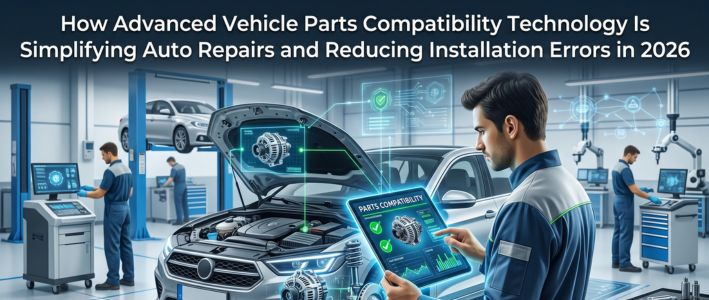
How Advanced Vehicle Parts Compatibility Technology Is Simplifying Auto Repairs and Reducing Installation Errors in 2026
Modern vehicles contain thousands of interconnected mechanical and electronic components. As vehicle designs become more sophisticated, selecting the correct replacement component has become increasingly important. A part that appears visually compatible may still differ in dimensions, connectors, software requirements, engine specifications, or transmission configuration.
In 2026, advanced vehicle parts compatibility technology is helping repair shops, suppliers, and vehicle owners identify the right components before installation. Technologies such as VIN-based identification, digital parts catalogs, automated compatibility databases, and intelligent matching systems are reducing ordering mistakes and making vehicle repairs more efficient.
This development is especially valuable for buyers searching for a quality used engine or evaluating used transmissions with warranty, where correct compatibility can significantly influence installation success and long-term reliability.
What Is Vehicle Parts Compatibility Technology?
Vehicle parts compatibility technology uses digital vehicle information to determine whether a particular component is suitable for a specific vehicle.
Modern systems can analyze information such as:
- Vehicle Identification Number (VIN)
- Make and model
- Model year
- Engine code
- Transmission type
- Drivetrain configuration
- Production specifications
- Original equipment numbers
The system compares this information against parts databases to identify suitable replacement components.
Why Parts Compatibility Matters
Installing an incorrect component can cause significant problems. Potential issues include:
- Installation difficulties
- Electrical compatibility problems
- Performance issues
- Warning lights
- Premature component failure
- Additional labor costs
- Delayed repairs
Correct parts matching helps technicians avoid these problems before the repair begins.
VIN-Based Parts Matching
VIN-based matching has become an important tool for modern automotive repair. The VIN provides detailed information about a specific vehicle. Compatibility platforms can use this information to identify components designed for that particular configuration.
This approach helps reduce errors caused by similarities between different vehicle versions.
For example, two vehicles may share the same model name but have different:
- Engine options
- Transmission configurations
- Production years
- Drivetrain systems
- Electrical architectures
VIN-based matching helps distinguish between these variations.
How Digital Catalogs Improve Parts Selection
Traditional parts identification often depended on printed catalogs and manual searches. Modern digital catalogs provide much faster access to:
- Part numbers
- Compatibility information
- Technical specifications
- Interchange references
- Installation requirements
- Vehicle applications
Technicians can compare multiple components before placing an order. This reduces the possibility of selecting the wrong part.
Importance for Replacement Engines
Engine replacement is one of the areas where compatibility is particularly important. A replacement engine must match the vehicle’s mechanical and electronic requirements.
Important factors include:
- Engine code
- Model year
- Fuel system
- Emissions configuration
- Mounting points
- Wiring connections
- ECU compatibility
- Transmission pairing
A quality used engine should therefore be evaluated based on compatibility rather than price or mileage alone.
Selecting a Quality Used Engine
When purchasing a quality used engine, buyers should verify as much information as possible before completing the purchase.
Important details include:
- Exact engine code
- Vehicle application
- Mileage
- Compatibility
- Compression condition
- Inspection results
- Maintenance history
- Warranty availability
Digital compatibility tools can make this verification process more efficient.
Transmission Compatibility Is Equally Important
Transmission replacement also requires precise matching. Different transmissions may vary in:
- Gear ratios
- Mounting configurations
- Electronic controls
- Torque converter specifications
- Wiring connectors
- Software requirements
- Drivetrain compatibility
Using an incompatible transmission can lead to shifting problems, warning lights, or installation complications.
Benefits of Used Transmissions With Warranty
Choosing used transmissions with warranty coverage can provide additional confidence when purchasing a replacement gearbox.
A warranty may cover specific failures during a defined period, depending on the supplier’s terms. Before purchasing, buyers should verify:
- Warranty duration
- Covered components
- Installation requirements
- Labor coverage
- Maintenance conditions
- Exclusions
- Return procedures
A warranty does not replace compatibility verification, so both factors should be considered.
How Compatibility Technology Reduces Installation Errors
Advanced matching platforms allow repair professionals to verify components before they arrive at the workshop.
This reduces:
- Incorrect orders
- Return shipments
- Installation delays
- Additional labor
- Vehicle downtime
Technicians can spend more time performing repairs rather than correcting parts-selection mistakes.
Supporting Repair Shops
Automotive repair shops process vehicles with increasingly complex configurations. Compatibility technology helps technicians quickly determine:
- Which component fits
- Which part number is required
- Whether an interchange part is suitable
- What additional components may be necessary
- Whether programming or calibration is required
This improves workflow efficiency and customer service.
Helping Consumers Make Better Decisions
Vehicle owners can also benefit from digital compatibility systems.
Before purchasing a replacement component, consumers can provide their VIN and receive information about compatible parts.
This helps prevent situations where customers purchase components based only on:
- Vehicle appearance
- Model name
- Engine size
- General product descriptions
More precise information results in better purchasing decisions.
Compatibility and Electronic Systems
Modern replacement components increasingly interact with vehicle electronics. Engines and transmissions may require:
- Sensor compatibility
- ECU communication
- Module programming
- Software updates
- Electronic calibration
Compatibility technology can help identify these requirements before installation. This is especially important for newer vehicles with advanced driver and powertrain management systems.
Future of Automotive Compatibility Technology
Vehicle parts matching is expected to become even more intelligent. Future systems may incorporate:
- Artificial intelligence
- Predictive compatibility analysis
- Automated VIN interpretation
- Real-time inventory matching
- Digital vehicle twins
- Augmented-reality installation guidance
These technologies could further reduce errors and improve repair efficiency.
Final Thoughts
Advanced vehicle parts compatibility technology is transforming automotive repair in 2026 by making it easier to identify the correct components before installation. VIN-based matching, digital catalogs, automated databases, and intelligent compatibility platforms help reduce ordering mistakes, installation delays, unnecessary returns, and vehicle downtime.
For buyers searching for a quality used engine, verifying engine code, vehicle configuration, electronic compatibility, and inspection information is essential. Similarly, those considering used transmissions with warranty should confirm compatibility while carefully reviewing warranty terms and installation requirements.
As vehicles become more electronically integrated, accurate parts matching will become increasingly important. By combining reliable compatibility technology with professional inspection and installation, repair businesses and vehicle owners can make smarter replacement decisions and achieve more dependable automotive repairs.